

Before changing a product
Diagnose the whole availability path.
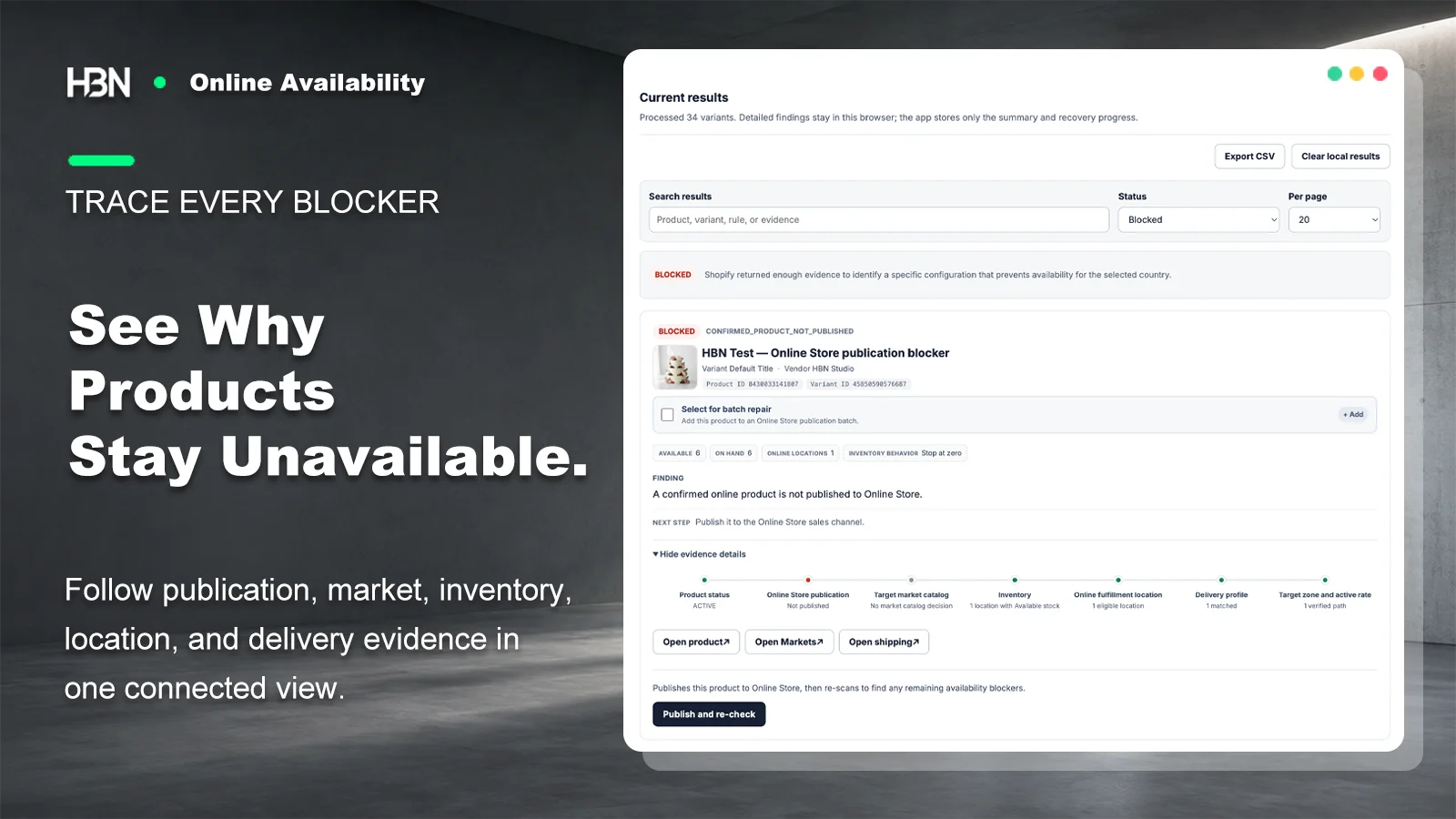
HBN: Online Availability checks the linked Shopify settings behind a shopper's ability to buy: product status, publication, market catalog, inventory, online locations, and the applicable shipping configuration.
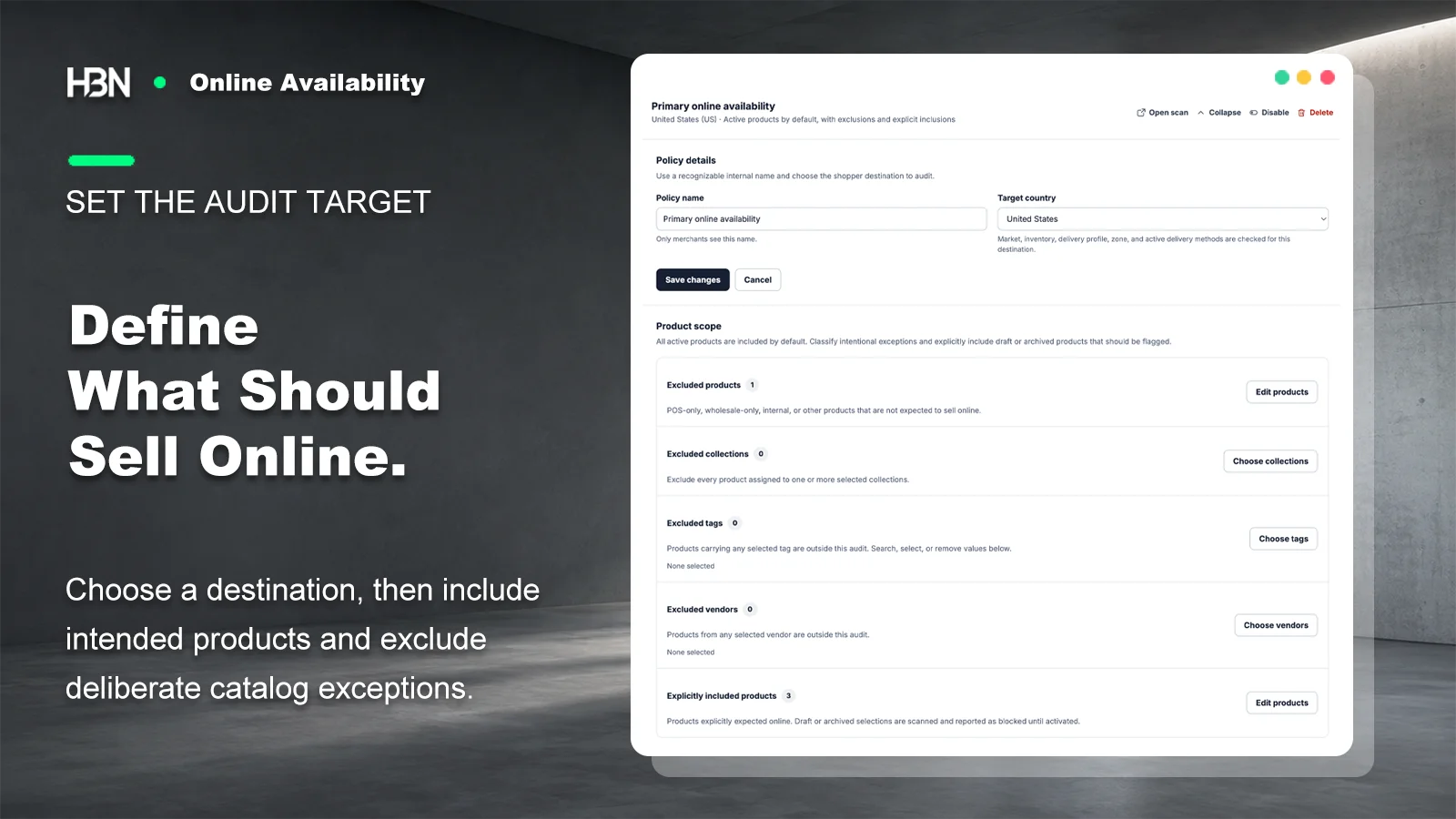
Define what should be available
Create a policy for one destination and the products expected to reach it. Exclude deliberate POS, wholesale, seasonal, or direct-link exceptions so they do not overwhelm the useful findings.
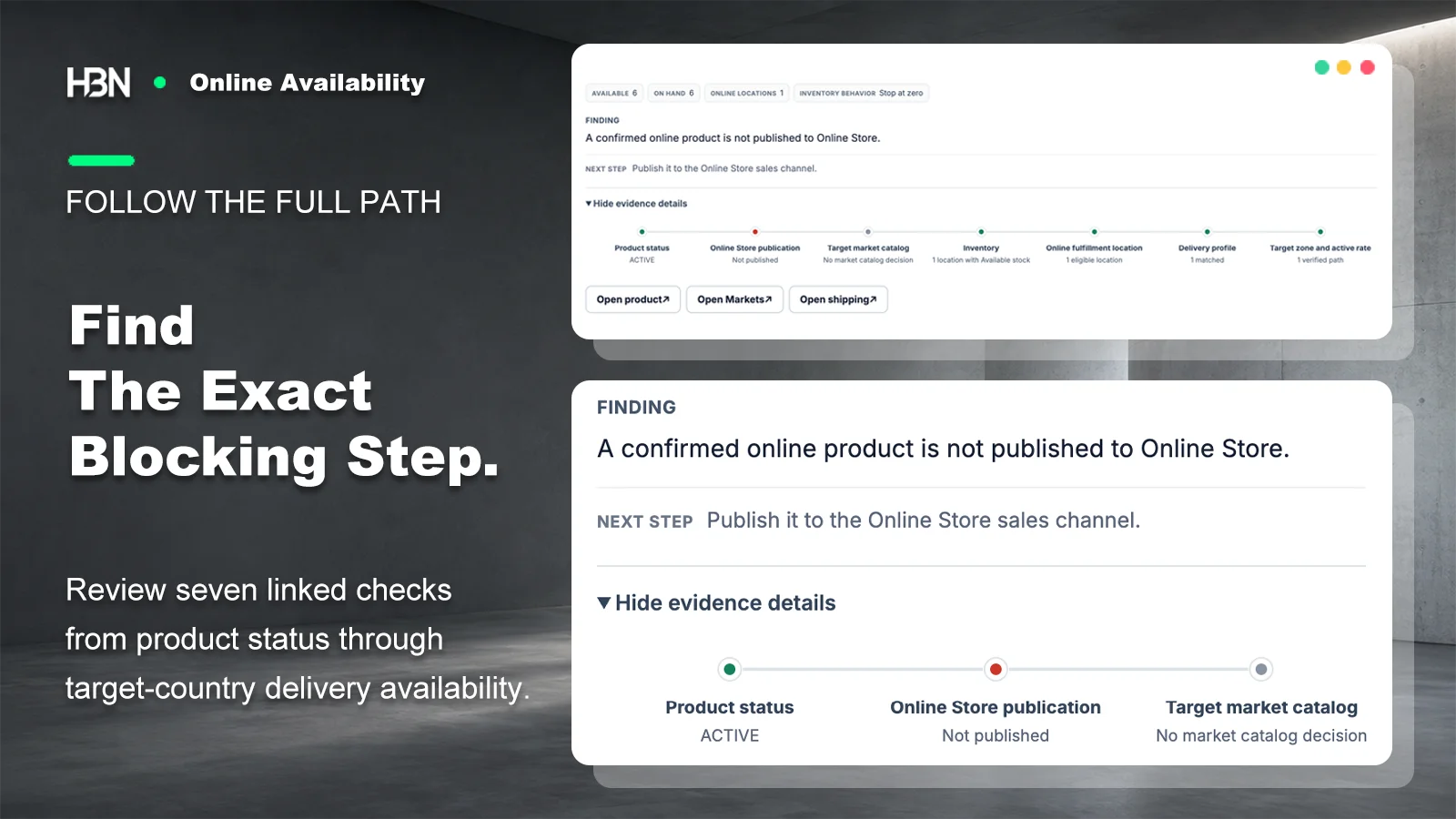
Read the evidence, not only the verdict
Blocked identifies a supported cause; Needs decision asks for merchant intent; Configured does not replace a checkout quote; Incomplete means Shopify did not return enough evidence to make a claim.
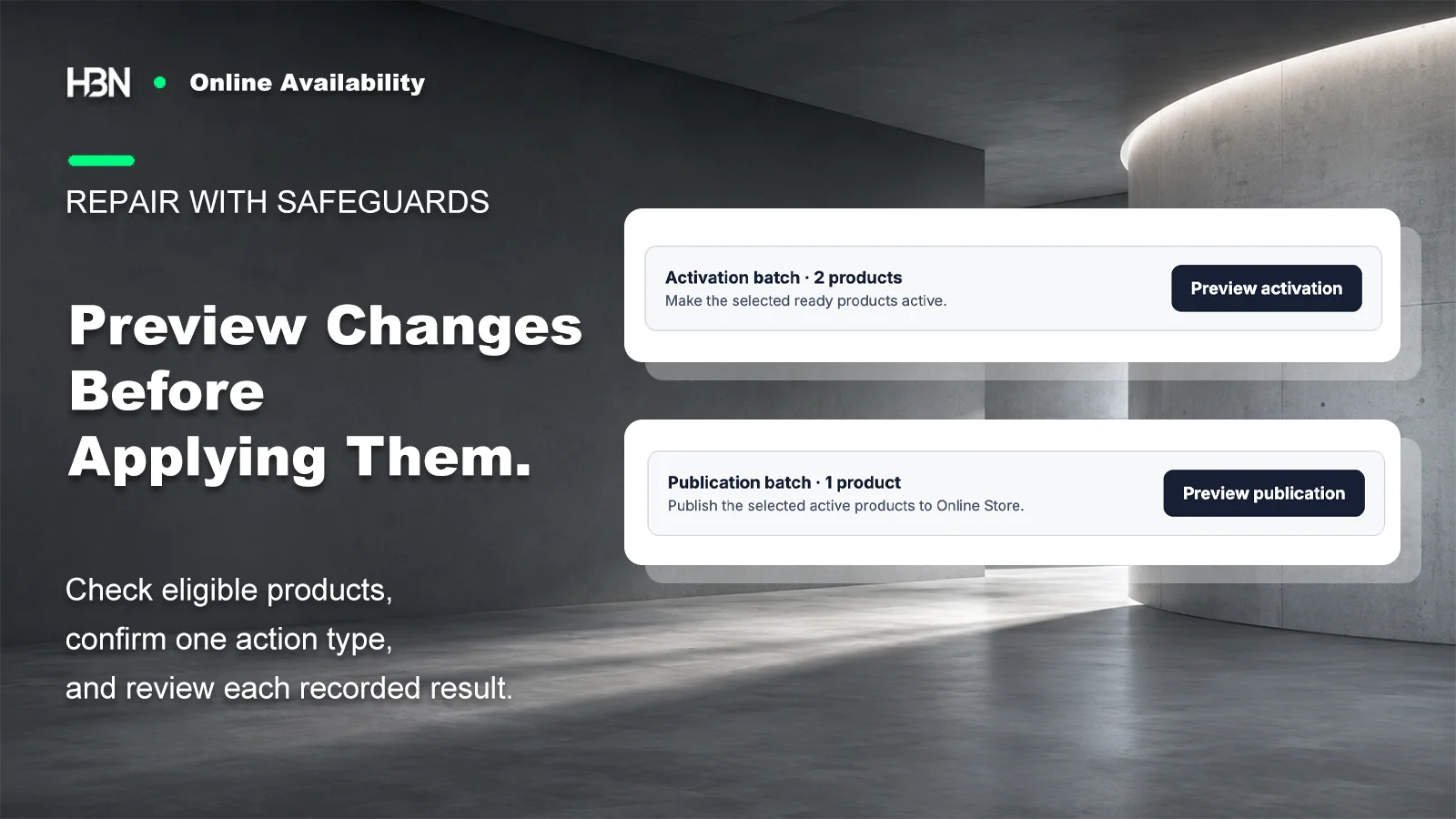
Limit automated repairs
The app can activate a product or publish it to the Online Store after a fresh check. Markets, inventory, locations, profiles, zones, and rates stay in Shopify Admin; interrupted scans can resume safely.